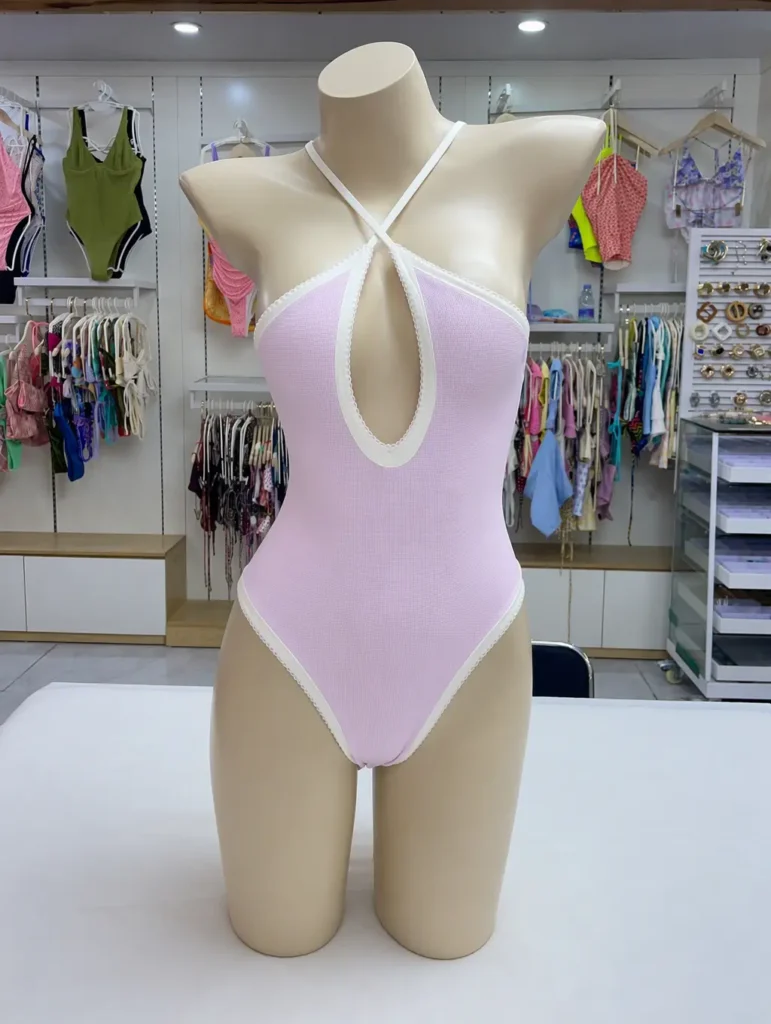

The swimwear market has experienced a significant evolution in recent years, with classic silhouttes making a dominant return to fashion runways and beachwear collections worldwide. At the center of this revival is the enduring, versatile one-piece swimsuit. Creating high-quality, durable, and stylish garments requires a complex blending of fashion design, advanced textile engineering, and precision assembly. Understanding one-piece swimwear manufacturing from concept to final product reveals the intricate journey behind transforming creative sketches into high-performance garments ready for the market.
1. Concept Development and Market Research
Every successful swimwear line begins long before fabric is cut or needles are threaded. The initial phase of one-piece swimwear manufacturing focuses on concept development, market analysis, and visual storytelling.
Identifying Trends and Target Demographics
Brands begin by analyzing upcoming seasonal trends, color palettes, print aesthetics, and consumer preferences. Whether designing sleek athletic swimsuits for lap swimming, luxury resortwear with high-cut silhouettes, or supportive maternity swimwear, establishing a clear demographic guides every subsequent technical decision.
Mood Boards and Initial Sketches
Designers compile mood boards featuring texture ideas, color swatches, hardware elements, and thematic inspirations. From these boards, rough hand sketches and digital vector illustrations (flat sketches) are drafted. These flats illustrate essential structural details such as neckline depth, leg openings, back styles, strap placements, and internal support structures.
2. Technical Packs and Material Sourcing
Once design concepts are finalized, the creative vision must be translated into technical documentation that factory technicians can execute accurately.
Building the Tech Pack
A Technical Package (Tech Pack) serves as the master blueprint throughout the entire one-piece swimwear manufacturing process. It contains:
- Technical flat drawings with precise dimensional annotations.
- Detailed bill of materials (BOM) listing every fabric, thread, trim, and label.
- Color codes (often Pantone TCX standards).
- Stitch types, seam allowances, and construction methods.
- Size specification sheets and measurement grading charts.
Sourcing Performance Fabrics and Trims
Swimwear fabrics face harsh environmental conditions including saltwater, chlorine, ultraviolet radiation, and sunscreens. Manufacturers carefully select high-performance textile blends:
- Nylon-Spandex (Polyamide-Elastane): Offers a soft hand-feel, rich color saturation, and excellent stretch recovery.
- Polyester-Spandex: Highly resistant to chlorine and UV exposure, making it ideal for performance and training swimwear.
- Recycled Synthetics: Sustainable textiles made from ocean plastics and regenerated nylon (such as ECONYL®) are increasingly vital in modern production lines.
In addition to outer shell fabrics, manufacturers source specialized linings, power-mesh panels for body sculpting, chlorine-resistant elastic bands, and rust-proof metallic or plastic trims (adjusters, rings, and closures).
3. Pattern Making and Sample Prototyping
Translating two-dimensional fabrics into three-dimensional garments that conform to the body’s natural contours demands exceptional precision in pattern making.
Pattern Creation and Digital Grading
Pattern makers create digital master patterns using Computer-Aided Design (CAD) software. Because swimwear fabrics possess high elastic stretch, patterns are engineered with negative ease—meaning the pattern dimensions are smaller than the actual body measurements so the garment stretches comfortably over the wearer.
Initial Sample Creation (Fit Samples)
Sample makers construct initial prototypes based on the master pattern. Fit models test these prototypes to evaluate stretch, coverage, support, and overall comfort during movement.
Fitting Adjustments and Revisions
Any issues regarding gaping, pulling, uncomfortable seam placements, or inadequate bust support are corrected on the digital pattern. Multiple sample iterations may be produced until the fit meets exact standards.
4. Pre-Production Planning and Fabric Preparation
Before mass assembly begins, raw materials undergo rigorous testing and preparation to prevent quality defects during full-scale manufacturing.
Fabric Quality Testing
Fabrics are subjected to physical lab tests to verify:
- Elastic recovery and dimensional stability after repeated stretching.
- Colorfastness to sea water, chlorinated water, and perspiration.
- Resistance to fabric pilling and abrasion.
Spreading and Layout Optimization
Approved fabrics are unrolled and allowed to relax to relieve tension incurred during shipping. Specialized software creates marker layouts to arrange pattern pieces across the fabric width efficiently, minimizing material waste.
5. Cutting and Mass Assembly
The assembly phase represents the core operational stage of one-piece swimwear manufacturing, where high-tech machinery and skilled craftspeople combine forces.
Precision Fabric Cutting
Relaxed fabric layers are stacked on specialized cutting tables. Automated computerized cutting machinery utilizing high-speed rotary blades or lasers cuts out fabric pieces, inner linings, and mesh inserts with millimeter accuracy.
Stitching Techniques and Seam Construction
Standard sewing techniques are insufficient for stretch garments. Swimwear assembly requires specialized machinery capable of creating flexible, strong, and flat seams:
- Overlock (Serger) Stitching: Joins main panels while finishing edges to prevent fraying and permit full fabric stretch.
- Flatlock Sewing: Creates flat, seamless joins that lie flat against the skin, eliminating chafing during active water movement.
- Elastic Attachment: Chlorine-resistant rubber elastic is encased within leg openings, necklines, and armholes using specialized zig-zag or coverstitch machines to maintain garment recovery and fit integrity.
Integration of Internal Support Elements
During sewing, internal structures such as removable or sewn-in soft cups, underwires, shelf bras, and tummy-control mesh panels are integrated into the suit’s lining structure.
6. Quality Control, Finishing, and Packaging
The final phase of one-piece swimwear manufacturing ensures every unit leaving the facility conforms to safety, aesthetic, and dimensional standards.
In-Line and Final Inspection
Quality control inspectors inspect garments at multiple checkpoints. Final inspections verify:
- Seam strength and stretch elasticity.
- Symmetry across straps, leg cuts, and necklines.
- Correct placement of care labels, size tags, and brand logos.
- Absence of loose threads, needle punctures, or fabric stains.
Finishing and Metal Detection
Finished swimsuits are trimmed, steam-pressed using tailored forms, and passed through metal detectors to ensure no broken needle fragments remain embedded in the seams.
Packaging and Distribution
Once cleared, swimsuits are fitted with hangtags, folded into protective hygienic bags, boxed according to size and color assortments, and prepared for shipment to retail stores and direct-to-consumer distribution centers around the globe.
Conclusion
The journey of one-piece swimwear manufacturing represents a delicate balance of artistic vision, material science, and technical expertise. From the initial spark of inspiration to the final packaged garment, each stage requires meticulous attention to detail to ensure the resulting piece delivers comfort, durability, and style. As sustainable materials and digital garment technologies continue to advance, the manufacturing process will keep evolving, meeting modern consumer demands while maintaining high standards of craft and performance.
