
A Timeless Tale of a Very Sensitive Princess
The Princess and the Pea is a beloved fairy tale that has entertained children for generations. Its simple plot, unusual test, and memorable characters make it an enjoyable story for young readers. At the heart of the tale is a mysterious princess who arrives at a royal castle on a stormy night. She claims to be a real princess, but the queen wants to discover whether she is telling the truth.
The story is often remembered for its humorous idea: a tiny pea hidden beneath a huge pile of mattresses can reveal whether someone is truly a princess. Although the situation is imaginary, the tale encourages children to think about kindness, honesty, identity, and the importance of looking beyond appearances.
For children discovering The Princess and the Pea story for young readers, the tale provides a wonderful introduction to classic fairy-tale storytelling. It combines mystery, imagination, humor, and a satisfying ending in a story that is easy to understand and fun to discuss.
A Stormy Night at the Castle
The story begins on a dark and stormy evening. Rain falls heavily, thunder rolls across the sky, and the royal family is safely inside their castle. Suddenly, someone knocks at the castle door.
When the door is opened, a young woman is standing outside in the rain. She is completely wet from the storm and looks tired from her journey. She explains that she is a princess and asks for a place to stay.
The prince of the kingdom has been searching for a true princess to marry. He has met many young women who claimed to be princesses, but he was never completely certain that they were genuine.
When the young woman arrives at the castle, the prince believes she may finally be the princess he has been looking for. However, the queen decides that she needs a way to test the visitor.
The Queen’s Unusual Test
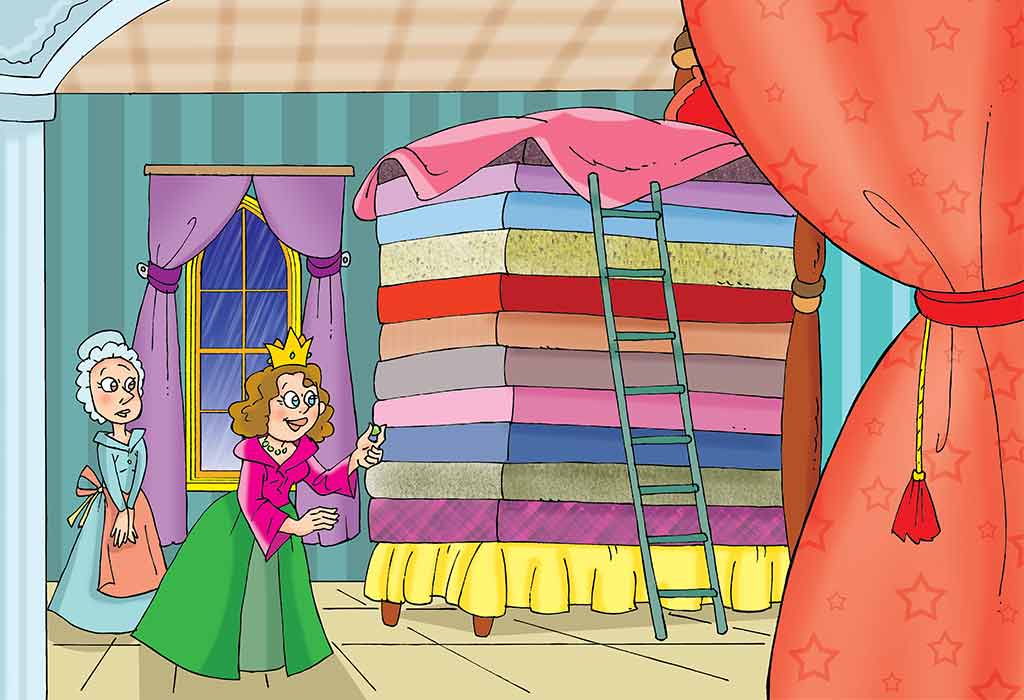
The queen comes up with a very unusual idea. She secretly places a single pea at the bottom of a bed. On top of the pea, she places many mattresses. She continues adding mattresses until the bed becomes extremely high and comfortable-looking.
Finally, she adds several soft blankets and prepares the bed for the visiting princess.
The queen believes that a genuine princess should be very sensitive and refined. If the young woman is truly a princess, the queen expects that she will notice something unusual about the bed.
The test may sound funny to modern readers, but this unusual challenge is what makes the fairy tale so memorable. Instead of using a complicated puzzle or dangerous adventure, the queen chooses something incredibly small: one tiny pea.
A Surprisingly Sleepless Night
The princess goes to bed without knowing about the hidden pea. She climbs into the enormous bed and tries to sleep.
However, something feels uncomfortable.
She turns from one side to another. She adjusts the blankets and tries different positions, but she cannot get comfortable. The mattresses are soft, yet she still feels that something is bothering her.
By morning, the princess looks exhausted. The queen asks her how she slept.
The princess explains that she barely slept at all because something hard was underneath her.
The queen immediately realizes that her unusual test has worked. The tiny pea was hidden beneath all those mattresses, yet the princess could still feel it.
What Makes the Story So Special?
One reason The Princess and the Pea story for young readers remains popular is its simplicity. Children do not need to understand complicated characters or follow a long series of events. The story has a clear beginning, middle, and ending.
The mysterious visitor creates curiosity. The queen’s test creates suspense. The princess’s reaction provides humor. Finally, the discovery that she truly is a princess gives the story a satisfying conclusion.
The tale also demonstrates how fairy tales can turn ordinary objects into important parts of a story. A small pea is normally something children might see on a dinner plate. In this story, however, that tiny object becomes the key to discovering the princess’s identity.
Lessons Children Can Discover
Although the story is mainly entertaining, young readers can find several meaningful ideas within it.
One important lesson is that appearances do not always tell the whole story. The princess does not arrive at the castle dressed in royal clothing or surrounded by servants. She appears like an ordinary traveler caught in a storm. Yet she turns out to be exactly who she says she is.
The story also encourages children to think about honesty. The princess does not pretend to be someone else. She simply tells the royal family who she believes herself to be and allows the queen’s test to reveal the truth.
Another lesson involves being open-minded. The queen does not immediately accept the visitor’s claim, but she also does not simply reject her. Instead, she creates a test and waits for the result.
Imagination and Fairy-Tale Magic
Fairy tales often invite readers to imagine situations that could never happen in everyday life. The Princess and the Pea is a perfect example.
The idea that someone could feel one tiny pea beneath a mountain of mattresses is wonderfully exaggerated. Children can enjoy the impossible nature of the situation while understanding the basic message of the story.
This imaginative quality is especially useful for young readers because it encourages creativity. After reading the story, children might imagine their own unusual tests, magical castles, mysterious visitors, or secret objects hidden beneath a bed.
Why Young Readers Enjoy This Classic
The Princess and the Pea has several features that make it appealing to children. It is short enough to follow easily, but it contains enough mystery to keep readers interested.
The storm creates an exciting opening. The princess’s arrival introduces a mystery. The queen’s secret plan creates anticipation, and the final discovery provides humor.
The story also has memorable imagery. Young readers can picture the enormous stack of mattresses, the tiny pea hidden beneath them, and the tired princess waking after a restless night.
These vivid details can make the story easier to remember and encourage children to visualize what they are reading.
Reading the Story Together
Parents, teachers, and caregivers can make the tale even more engaging by discussing it with children. Questions such as “Why did the queen place a pea under the mattresses?” or “Do you think you could feel the pea?” can encourage children to think critically about the story.
Young readers can also talk about whether the queen’s test was fair and imagine what they would have done if they had been the princess.
Such conversations transform a simple fairy tale into an opportunity for creativity, reasoning, and communication.
A Classic Worth Discovering Again
The Princess and the Pea continues to stand out because it turns an ordinary object into the center of an extraordinary adventure. Its combination of mystery, humor, imagination, and a memorable royal setting makes it an excellent choice for young readers.
For anyone exploring The Princess and the Pea story for young readers, this classic offers more than a simple tale about a princess and a pea. It introduces children to the imaginative world of fairy tales while encouraging them to think about honesty, identity, curiosity, and appearances.
Even after many years, the image of a tiny pea hidden beneath countless mattresses remains one of the most recognizable ideas in children’s literature. That unusual image is exactly why the story continues to capture young imaginations and remain a charming classic for new generations.
