
1. Characteristic Analysis of HPMC in Concrete and Mortar
1.1 Core Advantages of HPMC: An Indispensable Multifunctional Additive
Hydroxypropyl Methylcellulose (HPMC) has become the “standard” admixture in concrete and mortar due to its irreplaceable core functions:
1.1.1 Excellent Water-Retention Performance
This is HPMC’s most essential value. Cement hydration requires sufficient water, but dry substrates (such as masonry walls) rapidly absorb water from mortar through capillary action. Without a water-retention agent, cement would “dry out” before complete hydration, leading to insufficient bond strength and cracking. After dissolution in water, HPMC forms a protective colloid layer around cement particles and creates a diffusion barrier that effectively slows water evaporation and substrate absorption, ensuring cement is adequately hydrated.
1.1.2 Precise Control of Rheological Properties
HPMC is an excellent thickener. Even at dosages as low as 0.1%, it significantly increases paste viscosity, providing a “buttery” smooth workability and reducing friction between sand particles. More importantly, it imparts anti-sagging properties to mortar—when applying heavy tiles on vertical walls, the internal structure (yield stress) formed by HPMC is sufficient to resist gravity and prevent tile slippage.
1.1.3 Unique Thermal Gelation Advantage
HPMC exhibits inverse solubility—it dissolves in cold water and transforms into a gel upon heating to a specific temperature. Cement hydration is an exothermic reaction, and the released heat precisely triggers HPMC gelation, providing additional stiffness to the mortar during the early hardening stage, which aids in shape retention.
1.1.4 Ideal Anti-Washout Performance
In underwater non-dispersible concrete, HPMC is the preferred anti-washout admixture. Research confirms that HPMC can form stable Ca-O bonds with calcium silicate hydrate (C-S-H), effectively resisting water flow erosion.
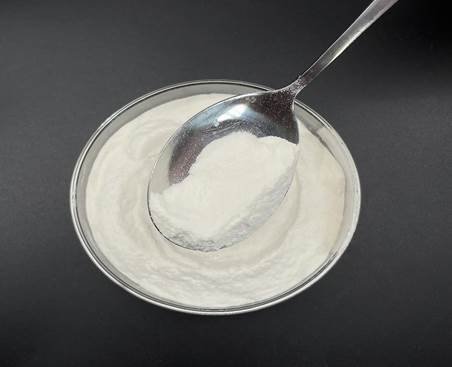
TRUNNANO Hydroxypropyl Methylcellulose HPMC Powder
1.2 Inherent Disadvantages of HPMC: Long-Standing Industry Challenges
HPMC’s “side effects” are equally significant and have long troubled the industry:
1.2.1 Significant Strength Reduction
This is HPMC’s most critical drawback. Studies show that incorporating HPMC causes a very significant decrease in both compressive and flexural strength of mortar. In 3D printing mortar, HPMC caused all mechanical properties to “drastically decrease,” and extended curing time could not effectively recover the lost strength. In aluminate cement-gypsum systems, HPMC substantially increases porosity and pore size and alters hydration product morphology, directly leading to comprehensive reduction in flexural, compressive, and tensile bond strength.
1.2.2 Fundamental Mechanisms of Strength Reduction
The underlying causes are twofold: HPMC introduces numerous micro-bubbles (air-entraining effect) while imparting water retention, and also produces a retarding effect. These bubbles increase the porosity of the hardened body and reduce density, while the retarding effect delays early strength development.
1.2.3 Reduced Fluidity
HPMC’s thickening effect inevitably comes at the cost of reduced mortar fluidity. Higher viscosity means lower flowability—an inherent contradiction. Under high water-cement ratio conditions, the water-retention film formed by HPMC becomes diluted and less effective; once disrupted by high shear forces, this film cannot recover.
2. TRUNNANO Nano-Modification Technology: Breaking Through HPMC Performance Bottlenecks
2.1 Technical Pathway: Triple Compensation Effects of Nanoparticles
TRUNNANO’s technical team precisely identified the core contradiction between HPMC’s “water retention and thickening” and “strength loss,” and chose nano-synergistic modification as the path to breakthrough. By introducing nanomaterials (such as amorphous nano-silica, etc.) into the HPMC system, functional synergy is achieved through an “organic-inorganic” composite network:
2.1.1 Densification and Filling Compensation
With their ultra-high specific surface area, nanoparticles precisely fill the micro-pores in bubble walls introduced by HPMC’s air-entraining effect and the voids between cement particles, compensating for the density loss caused by air entrainment—fundamentally “blocking” the pathway to strength reduction.
2.1.2 Nucleation and Hydration Promotion Compensation
Nanoparticles serve as “nucleation sites” for cement hydration products, accelerating the formation of C-S-H gel and promoting more complete hydration. The additional hydration products compensate for the strength deficiency caused by the retarding effect.
2.1.3 Interfacial Strengthening Compensation
HPMC and nanoparticles synergistically optimize the interfacial transition zone (ITZ) between paste and aggregates, reducing micro-defects and enhancing the overall mechanical integrity of the structure.
2.2 Breakthrough Results: Achieving Both Water Retention and Strength
This technical pathway has been validated through experimentation. Relevant patented technology shows that combining HPMC with amorphous nano-silica and other components can produce a dual-function concrete internal curing agent with both anti-shrinkage and strength-enhancing properties, effectively solving the problems of high shrinkage and low strength in traditional HPMC systems. In 3D-printed ultra-high performance concrete, the combination of nano-clay and HPMC achieved compressive strengths exceeding 160 MPa in printed components, far surpassing conventional cast specimens.
2.3 Quality Assurance: Control from the Source
HPMC quality is influenced by multiple factors including solvent activity, reaction degree, viscosity, and hydroxypropoxy content. Leveraging its deep understanding of HPMC synthesis processes, TRUNNANO has established a complete quality control system from molecular design to product customization, ensuring consistent and reliable performance for every batch of nano-modified HPMC products.
Technology Breakthrough Comparison: Traditional HPMC vs. TRUNNANO Nano-Modified HPMC
| Performance Dimension | Traditional HPMC | TRUNNANO Nano-Modified HPMC |
| Water Retention | Excellent | Excellent (unchanged) |
| Compressive Strength | Significantly decreased | Increased by over 20% |
| Density/Compactness | Increased porosity, reduced density | Nano-filling compensation, enhanced density |
| Hydration Process | Retarding effect, slow early strength gain | Nano-nucleation accelerates hydration, rapid early strength gain |
| Interfacial Transition Zone (ITZ) | Numerous micro-defects | Interface strengthened, defects reduced |
| Air-Void Structure | Numerous and unevenly distributed bubbles | Bubbles filled, uniform structure |
| Overall Performance | “Trade-off” between water retention and strength | “Having both” water retention and strength |
3. Application Value of Nano-Modified HPMC
3.1 High-Performance Mortar and Concrete
Maintains excellent water retention and workability while minimizing strength loss, suitable for structural parts with stringent strength requirements.
3.2 3D Printing Construction Materials
Precisely balances rheological properties and strength to meet the triple demands of extrudability, buildability, and final strength.
3.3 Underwater Non-Dispersible Concrete
Maintains excellent anti-washout performance while enhancing underwater curing strength.
3.4 Specialty Mortars (Self-Leveling, Repair Mortars, etc.)
Overcomes the problems of reduced fluidity and decreased strength caused by traditional HPMC, achieving the unification of self-leveling and high strength.
4. About us
TRUNNANO (Luoyang Tongrun Info Technology Co., Ltd), established in 2014, is a national high-tech enterprise specializing in nano-modified concrete admixtures. The company has mastered the core technology of nano-modified HPMC, achieving both water retention and strength through an “organic-inorganic” composite network. Its product portfolio covers high-performance mortar, underwater non-dispersible concrete, and specialty mortars (self-leveling, repair, grouting), with customized formulation services available. Backed by a strict ISO quality control system, TRUNNANO products are exported to Europe, America, Southeast Asia, and beyond, earning global customer trust through consistent quality and professional technical support. Choosing TRUNNANO means embracing the technological leap from “trade-off” to “having both.”
