
Introduction
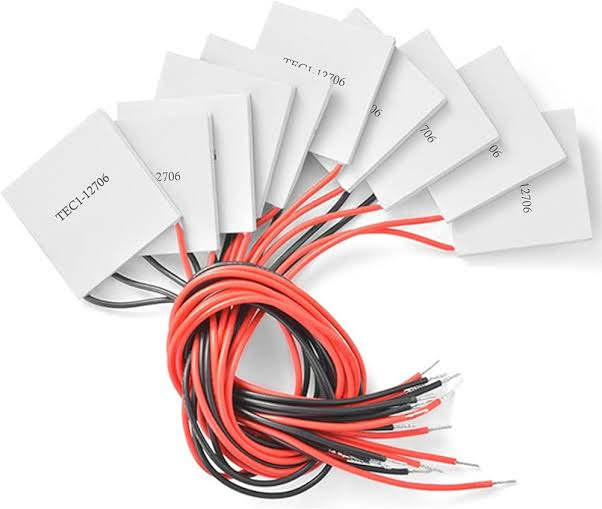
Modern electronic devices are becoming smaller, faster, and more powerful, creating an increasing need for reliable thermal management. From processors and sensors to laser systems and Thermoelectric Cooler Chip telecommunications equipment, excess heat can affect performance, efficiency, and operating life. Traditional cooling methods such as fans, heat sinks, and liquid cooling are useful in many applications, but they are not always suitable when precise, compact, and maintenance-free temperature control is required. This is where the Thermoelectric Cooler Chip offers a smart and practical solution.
A Thermoelectric Cooler Chip, commonly known as a TEC chip or thermoelectric cooler, uses the Peltier effect to transfer heat from one side of the device to another when electrical current passes through it. Unlike conventional cooling technologies, it has no moving mechanical components. This makes thermoelectric cooling attractive for applications where compact size, precision, reliability, and low maintenance are important.
What Is a Thermoelectric Cooler Chip?
A Thermoelectric Cooler Chip is a solid-state semiconductor device designed to provide controlled cooling and heating. It is typically constructed from multiple pairs of semiconductor elements positioned between ceramic plates. When direct current is applied, heat is absorbed on one side and released on the opposite side.
The direction of heat transfer depends on the direction of the electrical current. Reversing the current can therefore reverse the cooling and heating sides. This bidirectional capability gives thermoelectric technology an advantage in applications requiring both temperature reduction and temperature stabilization.
The chip itself does not generate cold in the same way that a traditional refrigeration compressor does. Instead, it actively moves thermal energy from one surface to another. The hot side must therefore be connected to an appropriate heat dissipation system, such as a heat sink, fan-assisted cooler, or liquid cooling system.
How Thermoelectric Cooling Works
The operating principle behind a Thermoelectric Cooler Chip is the Peltier effect. When electric current flows through different semiconductor materials, thermal energy is transported across their junctions. One surface absorbs heat and becomes cooler, while the opposite surface releases heat and becomes warmer.
A basic thermoelectric cooling system consists of three important elements: the TEC chip, a power source, and a heat dissipation mechanism. The TEC receives electrical power and creates a temperature difference between its two sides. The heat generated and transferred to the hot side must then be removed efficiently.
This process allows engineers to achieve accurate temperature control without compressors, refrigerants, or complex mechanical assemblies. By regulating the input current, a control system can adjust the cooling capacity according to the requirements of the application.
Key Advantages of Thermoelectric Cooler Chips
One of the biggest advantages of a Thermoelectric Cooler Chip is its compact design. Because it contains no compressor, pump, or moving fan inside the module, it can be integrated into small electronic systems where space is limited.
Another major benefit is reliability. Solid-state construction reduces the number of mechanical components that can wear out over time. When properly operated within its electrical and thermal specifications, a TEC chip can provide stable performance over extended periods.
Precision temperature control is another important advantage. TEC systems can be controlled using temperature sensors, controllers, and feedback circuits. This makes them suitable for applications where maintaining a specific temperature range is more important than simply reducing heat.
Thermoelectric systems can also operate with relatively low noise because the cooling element itself has no moving parts. Any noise in the overall system generally comes from external heat-dissipation equipment such as fans or pumps.
Applications in Modern Electronics
Thermoelectric Cooler Chips are used in a wide variety of industries. One important application is laser and optical equipment. Lasers can be sensitive to temperature changes, and maintaining a stable operating temperature can help improve wavelength stability and overall performance.
They are also used in scientific instruments and laboratory equipment. Sensitive sensors and measurement systems may require controlled thermal conditions to produce accurate and repeatable results.
Telecommunication equipment can benefit from thermoelectric cooling as well. Certain optical components and electronic circuits perform more reliably when their temperature remains within a controlled range. TEC technology can help maintain this stability in compact equipment.
Another growing application is electronics cooling. High-performance processors, imaging devices, detectors, and specialized sensors can produce considerable heat. A properly designed thermoelectric system can provide localized cooling when conventional methods are difficult to implement.
Thermoelectric technology is also used in medical and analytical equipment where precise temperature management is essential. In these applications, the ability to heat or cool a component electronically can simplify system design.
Choosing the Right Thermoelectric Cooler Chip
Selecting the appropriate Thermoelectric Cooler Chip requires careful consideration of several technical factors. Cooling capacity is one of the most important. Engineers need to determine how much heat must be removed from the target component under normal operating conditions.
The maximum temperature difference is another key specification. Different TEC designs provide different temperature differentials, and the actual performance depends on factors such as electrical input, hot-side temperature, and thermal resistance.
Operating voltage and current should also match the available power supply and control system. Supplying inappropriate electrical power can reduce efficiency or potentially damage the module.
The physical dimensions of the chip matter as well. The TEC must fit correctly against the component being cooled while providing sufficient contact area for effective heat transfer.
Thermal interface materials should also be considered. Proper contact between the TEC and the heat source, as well as between the TEC and the heat sink, is essential for efficient thermal transfer.
Importance of Hot-Side Heat Management
A Thermoelectric Cooler Chip can only perform effectively when its hot side is managed properly. The chip transfers heat from the cold side to the hot side, but the hot side must release both the absorbed heat and the electrical energy converted into additional heat.
For this reason, a suitable heat sink is often essential. In higher-power systems, forced-air cooling or liquid cooling may be necessary to maintain an acceptable hot-side temperature.
Poor heat dissipation can significantly reduce cooling performance. Even a high-quality TEC chip may fail to achieve the desired cold-side temperature if the heat sink is undersized or poorly installed. Engineers should therefore consider the complete thermal system rather than selecting a TEC based only on its maximum cooling specifications.
Improving Efficiency and Performance
Efficient thermoelectric cooling depends on proper system design. The heat load should be accurately estimated before selecting the TEC. Oversizing or undersizing the device can lead to inefficient operation.
Temperature sensors and electronic controllers can improve performance by adjusting the current supplied to the TEC according to real-time temperature conditions. This approach helps prevent unnecessary power consumption while maintaining the desired temperature.
Good thermal contact is equally important. Suitable thermal interface materials can reduce resistance between surfaces and improve heat transfer. Mechanical mounting should provide adequate contact without applying excessive pressure that could damage the ceramic structure.
The overall design should also account for ambient temperature. A TEC operating in a hot environment may require a more powerful heat-dissipation system to achieve the same cooling performance.
Future Potential of Thermoelectric Cooling
As electronic devices continue becoming smaller and more powerful, thermal management will remain an important engineering challenge. Thermoelectric technology has strong potential because it offers compact, precise, and reliable temperature control.
Future improvements in semiconductor materials, manufacturing processes, and thermal management systems could increase the efficiency and cooling capacity of thermoelectric devices. Integration with intelligent temperature controllers may also allow TEC systems to respond automatically to changing thermal loads.
The technology is particularly promising for specialized applications where conventional refrigeration is too large, noisy, complex, or difficult to integrate.
Conclusion
The Thermoelectric Cooler Chip provides a smart approach to electronic cooling by combining solid-state construction, compact dimensions, precise temperature control, and reliable operation. Its ability to transfer heat electronically makes it valuable for optical systems, sensors, laboratory instruments, telecommunications equipment, and specialized electronics.
Although effective heat dissipation remains essential for achieving strong performance, careful selection, proper installation, and intelligent control can make thermoelectric cooling a highly practical solution. As electronics become increasingly compact and thermally demanding, Thermoelectric Cooler Chips are likely to remain an important technology for accurate and dependable temperature management.
