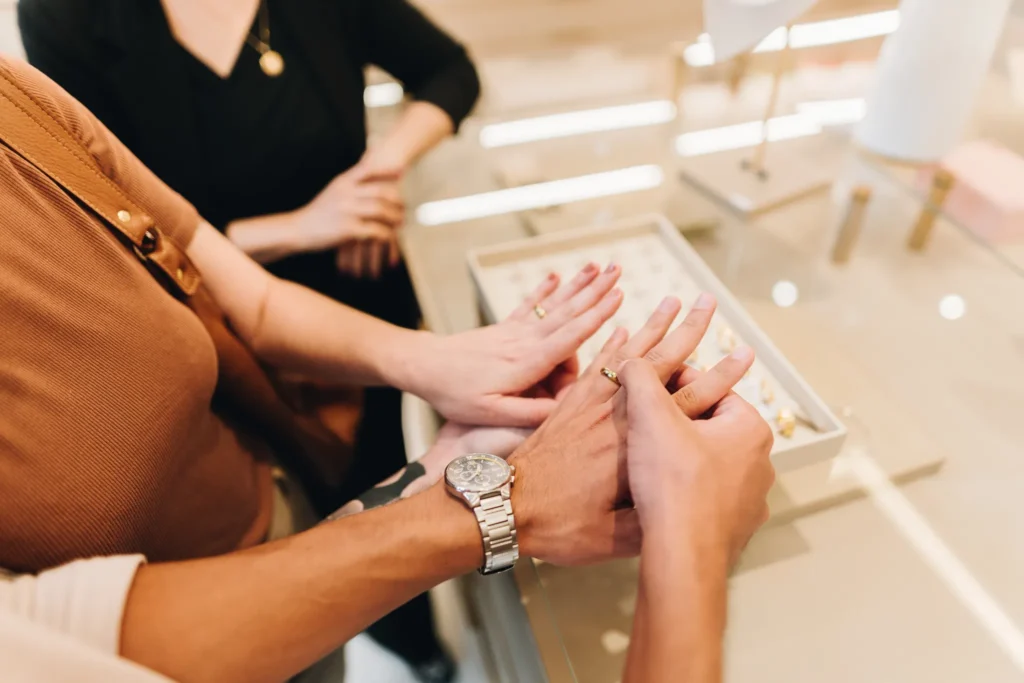

At a jewellery counter, a new ring may come with exact specifications and several size options. A pre-owned piece may offer an unusual design and a story that can only be partly recovered. Neither label tells you whether the ring will suit you or what it will cost to keep it in good order. Compare the pieces themselves and ask which details the seller can establish.
Among the changes in the way UK shoppers choose jewellery, the willingness to look beyond a single type of retailer is worth exploring. Bringing a new piece and a pre-owned one into the same comparison can reveal how much you value condition, design, documentation and aftercare. Those priorities may differ depending on whether you are buying a daily ring or an occasional piece.
Compare condition and construction
Ask to see the underside and edges of both pieces. On a pre-owned ring, look for signs of earlier alteration and ask a jeweller to check worn claws or joints. A mark can be superficial, while a loose stone needs attention. Ask which work should happen before the piece is worn. Check a new ring’s finish as carefully, especially the areas you will feel between the fingers.
Try the pieces in your size or get an estimate for the necessary adjustment. A continuous pattern or stones around the shank can make work more involved. If the pre-owned ring fits already, that may matter more than a small difference in price. If the new piece will be made after ordering, check how closely it will match the sample.
Ask what is known about each piece
A new piece can have a clear specification and a retailer’s record of its components. Ask what that specification says about metal, stone and finish. For an older ring, look for hallmarks and any existing paperwork. A jeweller can help distinguish what those marks support from what remains uncertain about ownership or origin.
Take particular care with gem descriptions. A family story or dealer’s label may suggest a stone’s identity, but the supporting evidence can vary. Ask what testing has been done and whether a report is available where appropriate. Keep a written description for either purchase, including any work the seller agrees to carry out.
Include services in the price comparison
Get a quote for immediate repairs or resizing. Ask who will service the piece afterwards and what the first inspection would cover. A lower price for an older ring may leave room for necessary work. A higher price for a new ring may include services you value. Comparing the figures on the same basis makes those differences clearer.
Think about which qualities you want to preserve. You may like the finish an older piece has developed and prefer to keep it, or want a crisp new surface that can be maintained. Tell the jeweller before work begins. A routine polish can change the texture that first caught your eye.
Final Thought
Choose between specific pieces with their condition and costs in view. A pre-owned ring can give you a design you rarely see, while a new piece can make size and servicing easier to arrange. The stronger purchase will be the one you understand well enough to wear with confidence.
