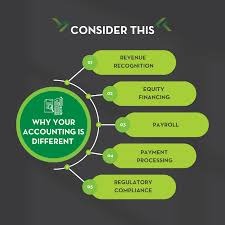

SaaS (Software as a Service) companies operate on subscription-based models that are fundamentally different from traditional businesses. Instead of one-time transactions, they deal with recurring revenue, deferred income, churn, and complex financial metrics. Because of this complexity, standard bookkeeping often falls short. SaaS companies require specialized bookkeeping services that understand their unique financial structure and reporting needs. You can explore more about SaaS-focused financial support here: https://www.bobsbookkeepers.com/saas
The Unique Financial Structure of SaaS Businesses
SaaS companies don’t simply “sell and record revenue.” They manage ongoing customer relationships where revenue is earned over time rather than at the point of payment. This creates a need for precise tracking of subscription cycles, upgrades, downgrades, and cancellations.
Unlike traditional businesses, SaaS companies must carefully distinguish between cash received and revenue actually earned. This distinction is critical for producing accurate financial statements and making informed business decisions.
Revenue Recognition Complexity
One of the biggest challenges in SaaS accounting is revenue recognition. Many SaaS companies offer annual or multi-month subscriptions paid upfront. While cash is received immediately, the revenue must be recognized gradually over the service period.
This requires compliance with accounting standards such as ASC 606, which governs how revenue should be recognized over time. Without specialized bookkeeping, companies risk overstating revenue in early periods and underreporting liabilities like deferred revenue.
Generic bookkeeping systems often fail to handle this complexity correctly, leading to misleading financial reports that can harm decision-making and investor trust.
Importance of Tracking SaaS Metrics
SaaS companies rely heavily on key performance indicators (KPIs) such as Monthly Recurring Revenue (MRR), Annual Recurring Revenue (ARR), churn rate, Customer Acquisition Cost (CAC), and Lifetime Value (LTV).
These metrics are not just marketing numbers; they are essential financial indicators that guide growth strategies and investment decisions. Specialized bookkeeping services ensure these metrics are calculated correctly and consistently.
Without accurate tracking, companies may overestimate growth or underestimate churn, leading to poor strategic decisions and financial instability.
Managing Deferred Revenue and Cash Flow
Deferred revenue is one of the most important accounting elements in SaaS businesses. When customers pay upfront for a yearly subscription, that payment is recorded as a liability until the service is delivered over time.
Proper bookkeeping ensures that deferred revenue is tracked accurately and released correctly into earned revenue each month. This directly impacts cash flow reporting and financial forecasting.
Mismanagement of deferred revenue can make a company appear more profitable than it actually is, which can mislead investors and internal stakeholders.
Investor Reporting and Financial Transparency
SaaS companies often rely on external funding from investors or venture capital firms. These stakeholders require clear, transparent, and accurate financial reporting before making investment decisions.
Specialized bookkeeping ensures that financial statements reflect true business performance, including realistic revenue growth, churn rates, and customer retention trends.
Accurate reporting builds investor confidence and improves the company’s chances of securing funding or scaling operations successfully.
Scaling Challenges and Financial Automation
As SaaS companies grow, their financial systems become more complex. They may expand into multiple pricing models, usage-based billing, or international markets with different tax requirements.
Specialized bookkeeping services help implement scalable systems that integrate with SaaS tools like payment processors, CRM platforms, and billing systems. This reduces manual errors and improves financial accuracy.
Automation alone is not enough; expert oversight is needed to interpret financial data correctly and ensure compliance with accounting standards.
Risk Reduction and Compliance
SaaS companies face strict regulatory requirements, especially around revenue recognition and tax compliance. Errors in bookkeeping can lead to penalties, audit risks, and financial misstatements.
Specialized bookkeeping services reduce these risks by ensuring compliance with accounting standards and maintaining accurate financial records. This protects the business from legal and financial exposure.
Strategic Decision Making Through Better Data
Good bookkeeping is not just about record-keeping—it is about providing actionable insights. SaaS-focused bookkeeping helps founders understand profitability by customer segment, identify churn patterns, and optimize pricing strategies.
With accurate financial data, leadership teams can make informed decisions about hiring, marketing spend, product development, and expansion.
This transforms bookkeeping from a back-office function into a strategic growth tool.
Why Generic Bookkeeping Falls Short
Generic bookkeeping services often fail SaaS companies because they are designed for simpler business models. They typically cannot handle subscription billing complexities, deferred revenue structures, or SaaS-specific KPIs.
As a result, financial reports may be incomplete or misleading. This can cause serious issues such as incorrect tax filings, poor forecasting, and loss of investor trust.
Specialized SaaS bookkeeping fills this gap by aligning financial processes with the unique operational model of SaaS businesses.
Conclusion
SaaS companies operate in a highly specialized financial environment that requires more than basic bookkeeping. From managing recurring revenue and deferred income to tracking critical performance metrics and ensuring compliance, every aspect of SaaS finance is more complex than traditional business accounting.
Specialized bookkeeping services provide the expertise needed to maintain accurate financial records, improve decision-making, and support long-term scalability. For any SaaS company aiming to grow sustainably and maintain investor confidence, investing in specialized bookkeeping is not optional—it is essential.
